
Idea Validation Checklist: 12 Steps Before You Build
A 12-step checklist to test startup ideas: define customers, rank assumptions, size market, interview users, run MVP tests, and assess risk.
21 min read
A 12-step checklist to test startup ideas: define customers, rank assumptions, size market, interview users, run MVP tests, and assess risk.

Ten frameworks to validate startup ideas - test market demand, customer fit, unit economics, risks, and go/no-go decisions.

Rank your riskiest assumptions, choose the right validation framework, and run pass/fail tests to prove demand, feasibility, and viability.

Compare 10 frameworks to assess and reduce IT infrastructure downtime, from governance and BIA to SRE error budgets, DR, and resilience.
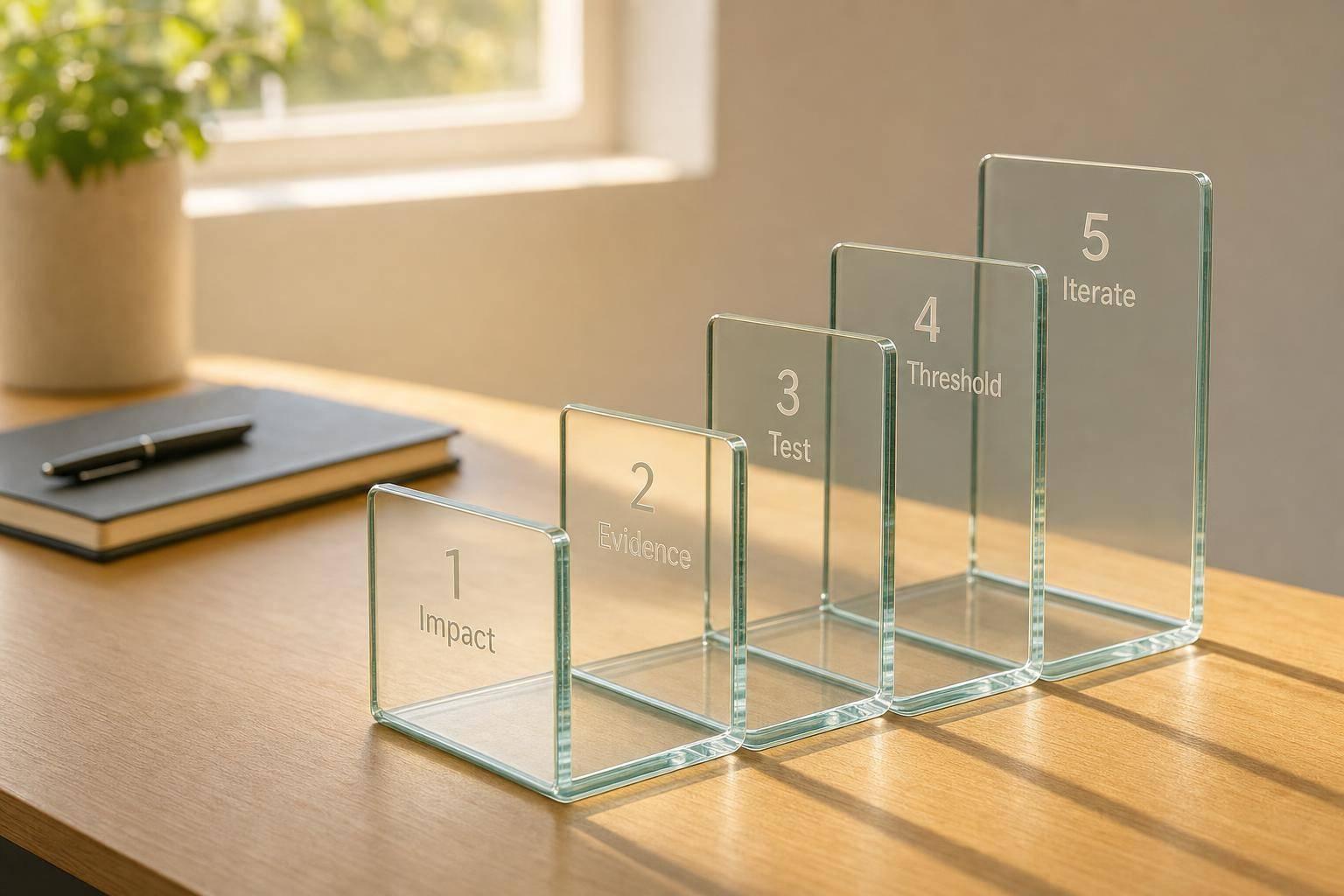
Test the riskiest assumptions first: rank impact and evidence, run small behavioral tests with preset thresholds, then iterate.
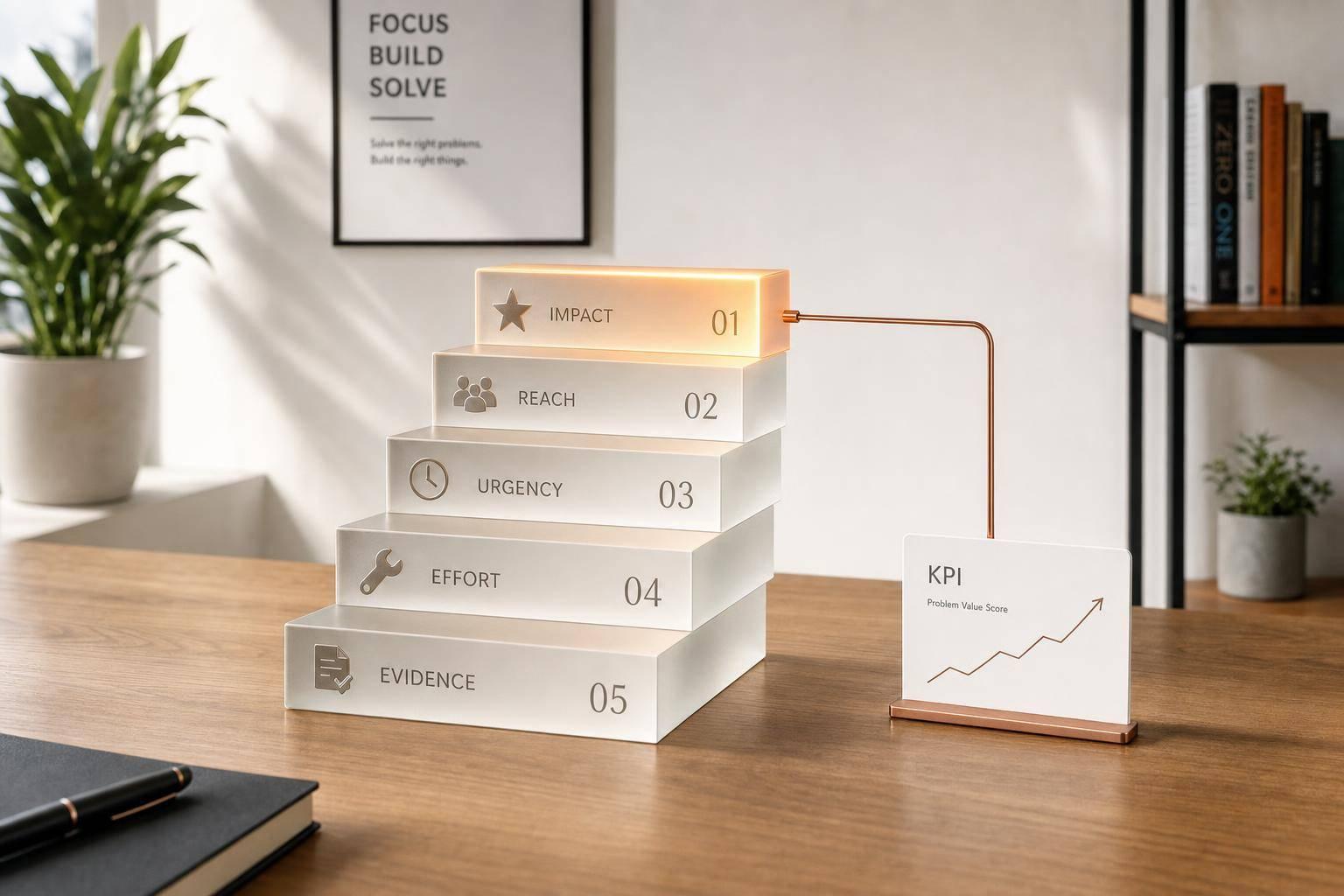
Score and rank startup problems by impact, reach, urgency, effort, and evidence; test top items and tie each to one KPI.
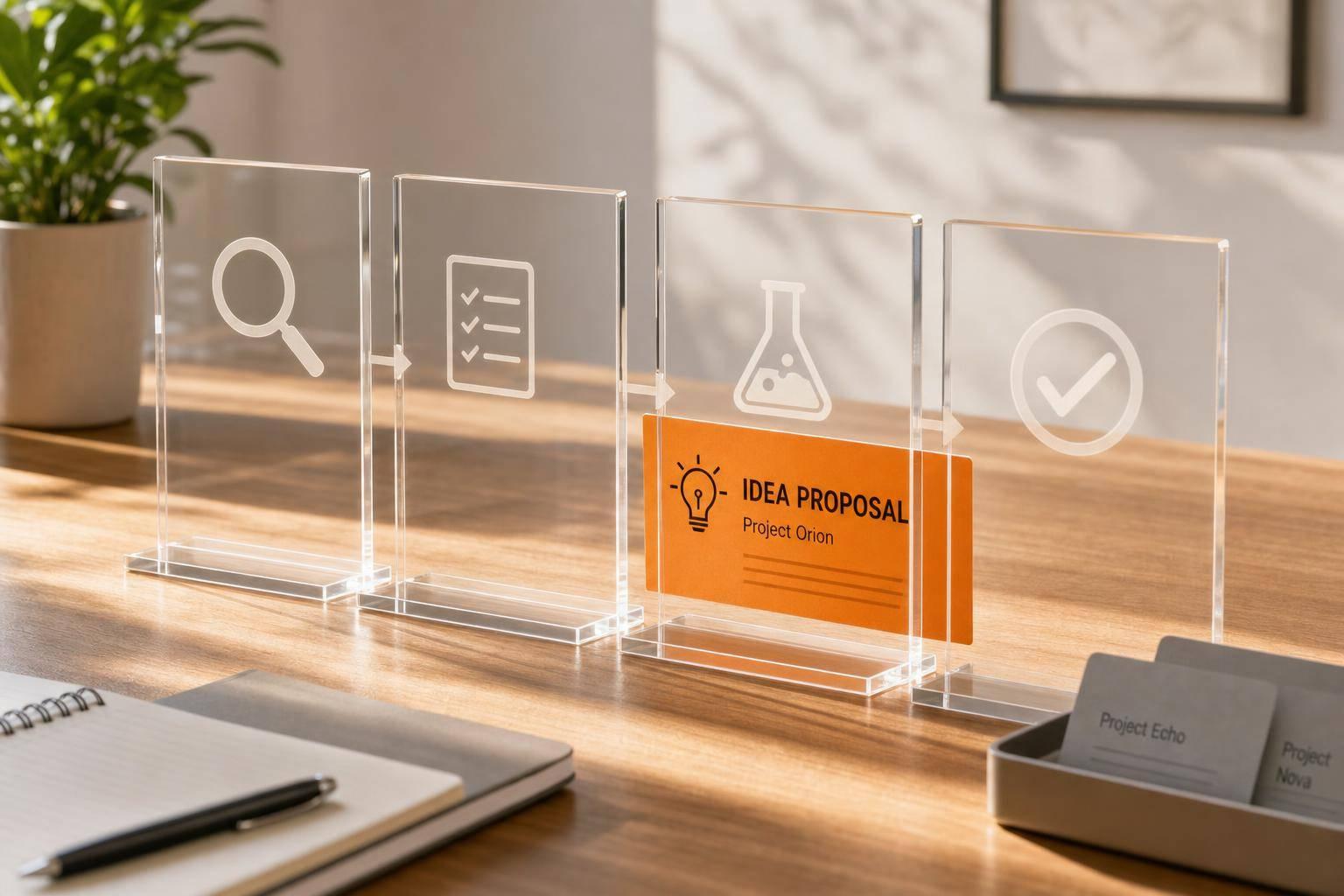
Judge ideas by evidence and decision fit, not enthusiasm—use stage-appropriate rubrics, low-cost tests, and clear gates to stop weak projects.

Test assumptions with interviews, usability tests, and concierge trials to turn feedback into clear product decisions.

Turn test results into decisions: validate assumptions, tweak only what failed, and run one focused experiment to cut risk.

Start with fast, cheap lean validation to test demand; only invest in full market research once behavioral signals repeat.

Test demand before you build: define the problem, interview prospects, run landing-page or smoke tests, and seek paid commitments.

Test the single riskiest assumption first—use cheap experiments to prove demand, execution, pricing, or legal viability before you build.
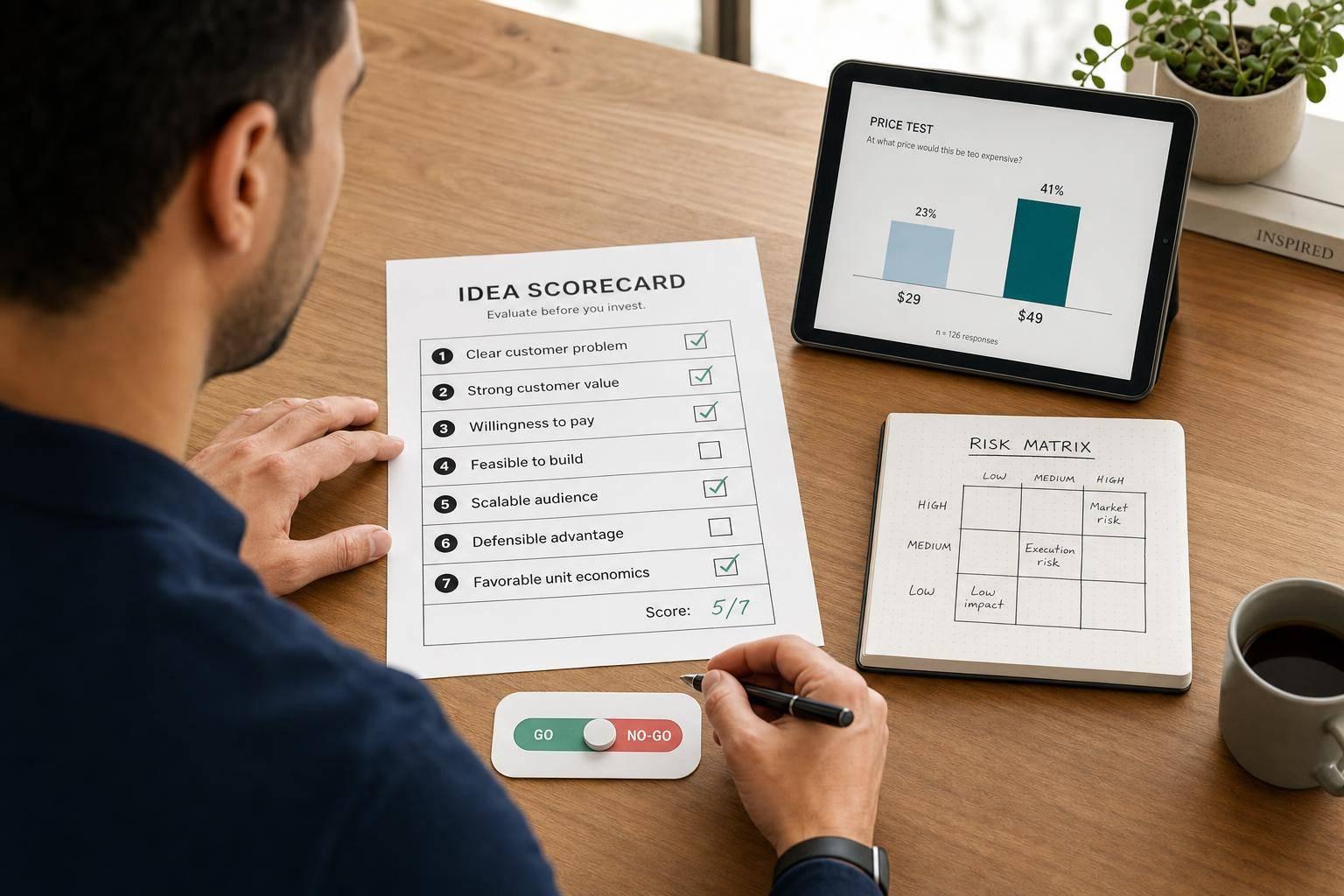
Validate ideas without bias: interview target customers, test demand and price, score objectively, map risks, and set clear go/no-go rules.

Expose and test hidden assumptions in your business idea: validate customers, differentiation, pricing, and risks with experiments.

Validate problem-solution fit early by defining a focused customer, running interviews, prototyping, and measuring real behavioral commitments.